
Ownership
Accountability and ownership
Identify the people who approve, operate, challenge and monitor AI systems.
Explore →Governance is not a document at the end of an AI project. It is a set of decisions, owners, controls and evidence embedded across the AI lifecycle.
Discuss your organisation →Explore the diagnostic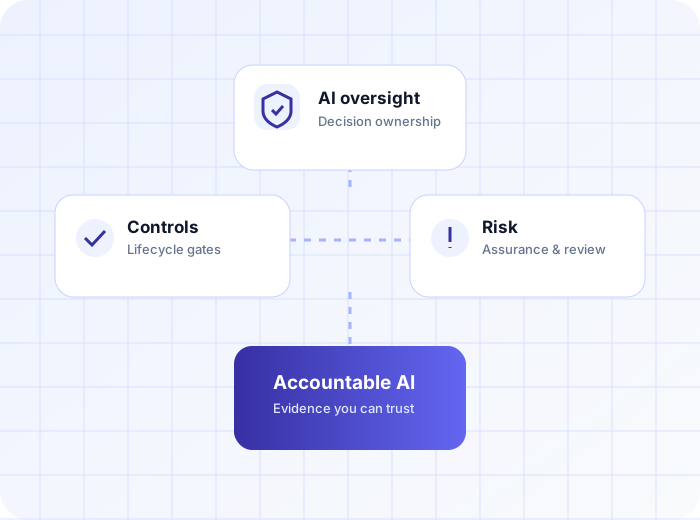
Identify the people who approve, operate, challenge and monitor AI systems.
Explore →Assess foreseeable harms, security, privacy, performance and operational risks.
Explore →Map decision gates and evidence from discovery through retirement.
Explore →Define when humans review, intervene, override or escalate AI decisions.
Explore →Establish metrics, incident handling, change control and reassessment.
Explore →Maintain traceable records of assessments, approvals, tests and exceptions.
Explore →Governance isn't a final checkpoint. It moves with the system — from the first business decision to ongoing monitoring and retirement.
Business purpose, intended users, risk classification and accountable sponsor.
Purpose & ownershipData, model, vendor, security and oversight requirements.
Requirements & controlsEvaluation criteria, test evidence, failure scenarios and remediation.
Testing & evidenceApprovals, monitoring, incident response and operating ownership.
Approval & accountabilityDrift, change, complaints, periodic review and decommissioning.
Ongoing assurance


